Measuring AgileEx: Transforming Team Experience into Actionable Insights for Agile Success

Published on 16 April 2026 by Zoia Baletska
Agile transformations rarely fail because teams don’t follow ceremonies. They fail quietly, over time, when the experience of working within the system becomes frustrating, slow, or disconnected from outcomes. That experience — how teams plan, build, release, and improve — is what we call AgileEx (Agile Experience).
AgileEx sits at the intersection of process, tooling, collaboration, and perception. It reflects how it feels to work in an Agile environment — but more importantly, how effectively that environment enables teams to deliver value. Unlike velocity or sprint completion rates, AgileEx is not a single metric you can pull from Jira. It needs to be constructed thoughtfully from multiple signals.
What AgileEx Actually Is
AgileEx captures the quality of your Agile system from the team’s perspective. It answers questions like:
-
Do developers feel blocked or supported?
-
Are Agile rituals useful or performative?
-
Is delivery predictable or chaotic?
-
Are teams improving, or just repeating cycles?
It’s closely related to DevEx (Developer Experience), but broader. DevEx focuses on the developer’s interaction with code, tools, and environments. AgileEx includes that, but also considers planning, prioritisation, cross-team alignment, and feedback loops.
A team with strong AgileEx doesn’t just deliver — it understands why it delivers well, and can sustain that performance.
Why Measuring AgileEx Is Worth the Effort
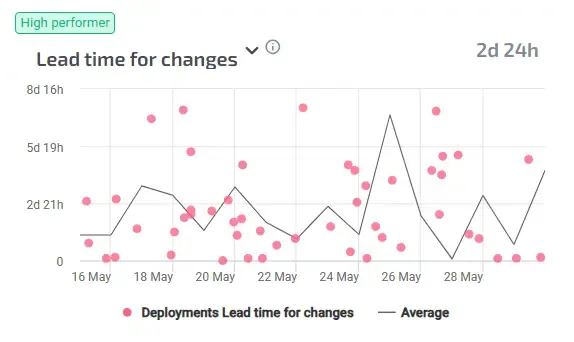
Most organisations already track delivery metrics: lead time, deployment frequency, and defect rates. These are useful, but they only show outcomes.
AgileEx gives you context.
When delivery slows down, AgileEx helps explain whether the cause is unclear priorities, excessive coordination overhead, poor backlog quality, or friction in collaboration. It turns vague complaints like “this sprint felt messy” into measurable signals you can act on.
Over time, AgileEx becomes an early warning system. Delivery metrics tend to lag — by the time they degrade, the underlying issues have already taken root. AgileEx surfaces those issues earlier.
The Challenge: You Can’t Measure “Experience” Directly
Unlike uptime or latency, AgileEx isn’t observable through a single system. It’s a composite signal made up of both quantitative and qualitative inputs.
If you try to reduce it to one proxy — say, sprint velocity — you’ll miss most of what matters. If you rely only on surveys, you’ll capture sentiment without grounding it in actual behaviour.
A useful AgileEx metric balances both.
Building Blocks of AgileEx Measurement
To make AgileEx measurable, you need to combine signals across a few key dimensions.
1. Flow & Delivery Signals
These describe how work moves through the system:
-
Lead time and cycle time
-
Work in progress (WIP) stability
-
Spillover between sprints
-
Frequency of blocked tasks
These metrics show whether the system flows smoothly or constantly stalls.
2. Planning & Alignment Quality
Agile often breaks down not during development, but before it starts:
-
Backlog readiness (are tasks actionable?)
-
Rework rate (how often tasks are reopened or redefined)
-
Scope changes mid-sprint
-
Dependency-related delays
High-performing teams tend to have boring, predictable planning. Low AgileEx teams constantly renegotiate scope.
3. Collaboration & Ownership
This dimension is harder to quantify, but patterns still emerge:
-
Cross-team dependencies per feature
-
Review turnaround time
-
Number of handoffs per task
-
Distribution of work (are a few people overloaded?)
Friction here often shows up as slow reviews, unclear ownership, or bottlenecks around specific individuals.
4. Perception & Sentiment
This is where surveys play a role — but they should be targeted and lightweight:
“I understand sprint goals”
“I feel blocked during my work”
“Our retrospectives lead to real improvements”
Instead of long quarterly surveys, short pulse checks tied to actual work cycles tend to be more useful.
Turning Signals into a Telling Metric
A single AgileEx score can be useful — but only if it’s constructed carefully. One practical approach is to treat AgileEx as a weighted composite index:
1 2 3 4 5AgileEx Score = 30% Flow Health + 25% Planning Quality + 20% Collaboration Efficiency + 25% Team Sentiment
Each component is normalised (for example, scaled from 0 to 100), then combined into an overall score.
What matters is not the exact weights, but consistency and transparency. Teams should understand what influences the score and how they can improve it.
Making It Work in Practice
This is where tooling becomes critical.
In platforms like Agile Analytics, AgileEx can be derived directly from your ticketing system. By connecting tools like Jira or Azure DevOps, the system can analyse historical patterns — how tasks move, where delays occur, how often work is redefined — and automatically classify signals.
Over time, machine learning models can distinguish between feature work and non-feature work, identify bottlenecks, and refine how AgileEx is calculated. Teams can also manually adjust classifications, effectively training the system to better reflect their context.
The result is not just a dashboard, but a continuously improving representation of how your Agile system behaves.
What a Good AgileEx Score Looks Like
A high AgileEx score doesn’t mean everything is fast. It means the system is coherent:
-
Work moves steadily, without constant interruptions
-
Planning is reliable, with minimal mid-sprint chaos
-
Collaboration happens without excessive coordination overhead
-
Teams feel in control of their work
A low score, on the other hand, often reflects fragmentation — too many dependencies, unclear priorities, or constant rework.
When to Use (and Not Overuse) AgileEx
AgileEx is most valuable at the team and program level. It helps identify systemic issues and track improvements over time.
It should not be used to rank individual developers or create pressure around a single number. Like any composite metric, it simplifies reality. Its purpose is to guide conversations, not replace them.
Final Thought
Agile frameworks give you structure, but not necessarily clarity. AgileEx fills that gap.
By combining delivery data with human signals, it creates a more complete picture of how your system actually works. Not how it’s supposed to work, not how it’s described in documentation — but how it behaves day to day.
And once you can see that clearly, improvement stops being guesswork.
Supercharge your Software Delivery!
Implement DevOps with Agile Analytics
Implement Site Reliability with Agile Analytics
Implement Service Level Objectives with Agile Analytics
Implement DORA Metrics with Agile Analytics